
Scroll
Mission
Scale the Fleet.Reach the Shores.
Bulwark Dynamics is building the world's first vertically integrated autonomous maritime logistics company — manufacturing hundreds of vessels, designed for the contested shores of the Western Pacific.
The IndoPacific Reality
Ports and fixed infrastructure will be targeted first.
Large ships operating in contested waters face existential risk.
The supply system is part of the target set — not behind the fight.
Distributed operations across the Western Pacific — including Expeditionary Advanced Base Operations (EABO) — demand a logistics model that has never existed. Effective sustainment in contested environments is not a support function. It is the fight.
- Forces spread across dozens of dispersed positions — each with different access constraints
- Austere shorelines with rocky shores, coral crests, and reef shelves that block any vessel with meaningful draft
- All-domain threats targeting the supply system — logistics is part of the target set, not behind the fight
- Legacy connectors were not designed for survivability in stand-in environments
By The Numbers
The scale of the problem demands an industrial answer.
Industrial Base Problem
China's shipbuilding capacity advantage over the U.S.
Per legacy connector vessel acquisition cost (LCU-1700, LCAC)
Years old — average age of U.S. legacy connectors
Vessels cut from U.S. Army watercraft fleet since 2018
Contested Logistics Problem
Daily tonnage required to sustain EABO across 20 distributed bases
Of LCACs and LCUs fully mission capable
U.S. dependency on commercial sealift assets
Proven autonomous vessels for contested maritime logistics
01
The Gap: No Vessel Built for the Fight
A 1:230 shipbuilding gap with China — and no industrial strategy to close it.
Current U.S. shipyards cannot produce the quantity or type of vessels required. Autonomy-only startups cannot scale production. Traditional primes are optimized for billion-dollar ships, not attritable, shallow-draft logistics craft.
02
Bulwark's Insight
The U.S. has solved this problem before.
During the Korean and Vietnam Wars, the U.S. relied on allied industrial bases — especially Japan — to build wartime logistics platforms at speed and scale. History is repeating itself.
03
Our Mission
Build the world's first vertically integrated autonomous maritime logistics company.
With production based in the U.S. and Japan, and designed for the IndoPacific fight. We are not a software company. We are not a traditional shipyard. We are the next-generation shipyard — built for wartime scale.
04
Why Japan
Japan is the only allied nation with the industrial base to match the threat.
Established FRP shipbuilding capability. Massive industrial throughput. China-free supply chains through our partners. Proximity to the First Island Chain. Through our partnership with Japanese shipyards, we can produce hundreds of vessels per year — a scale no U.S. startup can match. Production capacity is our primary KPI.
05
Vertical Integration Wins
The future will not be won by software-only autonomy companies.
It will be won by companies that control the entire stack: autonomy, C2, hull production, payload integration, expeditionary manufacturing, and in-theater sustainment. This is the same playbook that created every modern prime — and we are executing it from day one.
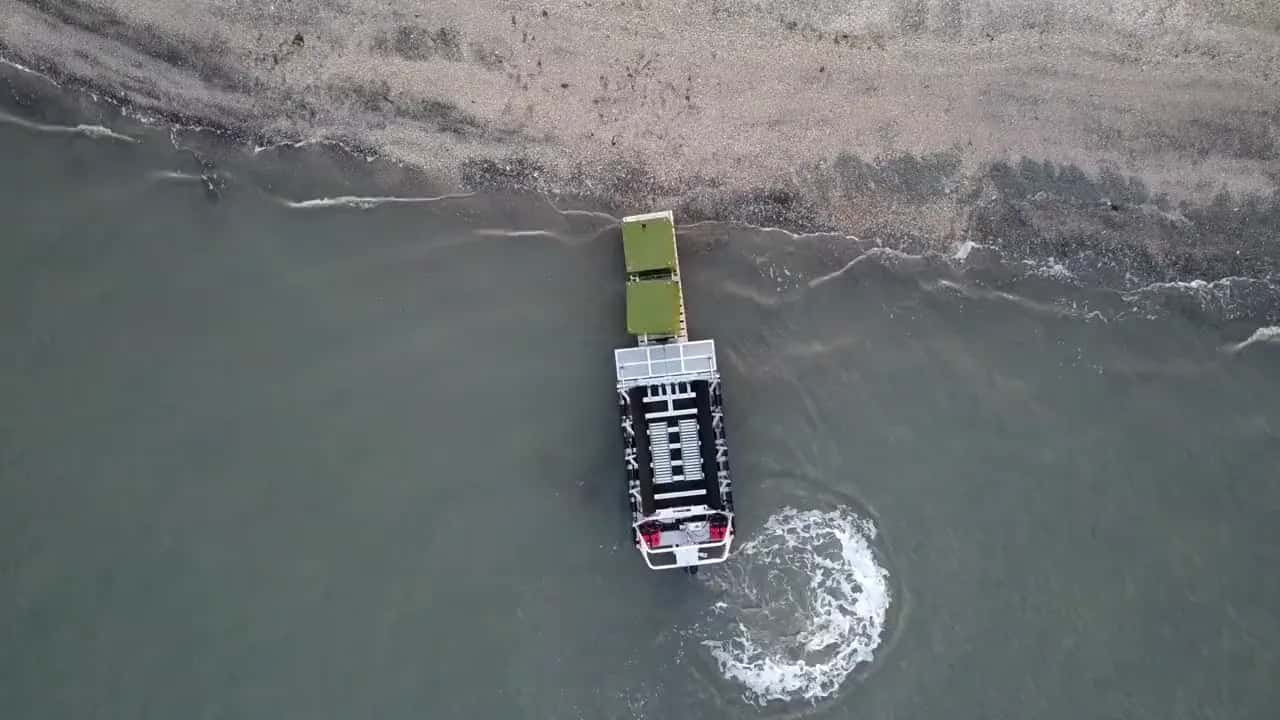
A New Maritime Category
The Autonomous Landing Craft
Purpose-built for the IndoPacific fight. Not a boat — a logistics system.
See the Vessel →Ultra-shallow draft
Beach landing without a pier
GPS-denied
Navigates in contested environments
Autonomous offload
No crew exposure on the beach
Rapid replenishment
Continuous logistics at operational tempo
Contested littorals
Designed for the worst-case environment
Mass production
Hundreds of units per year at scale
The Problem
The logistics infrastructure doesn't exist.
- No shallow-draft autonomous vessel in production
- U.S. shipbuilding capacity 230× behind China
- Legacy connectors cannot operate from austere beaches
- Autonomy startups lack manufacturing scale
- Traditional primes optimized for billion-dollar platforms
The Bulwark Answer
Vertically integrated. Industrially scaled. Allied-built.
- Autonomous landing craft purpose-built for contested logistics
- Production based in the U.S. and Japan — hundreds of units per year
- GPS-denied autonomous navigation
- American capital, allied manufacturing, Indo-Pacific ready
- Full stack ownership: autonomy through sustainment
Vision
To become the next-generation shipyard, powered by autonomy.
A vertically integrated maritime platform company built on wartime demand, industrial scale, and relentless manufacturing excellence.
Defense is the catalyst. Commercial is the multiplier. Beyond the conflict, autonomous maritime logistics will define the next century of offshore energy, island-nation supply chains, disaster relief, and coastal transport.
Build
where the fight is.
Scale
faster than competitors.
Define
the future of maritime logistics.
.svg)
.svg)